




Hotel PMS, POS and Smart Rooms on One Platform
A hotel system split across three programs quietly costs you time and money. See what changes when reception, rooms and billing run on one platform.
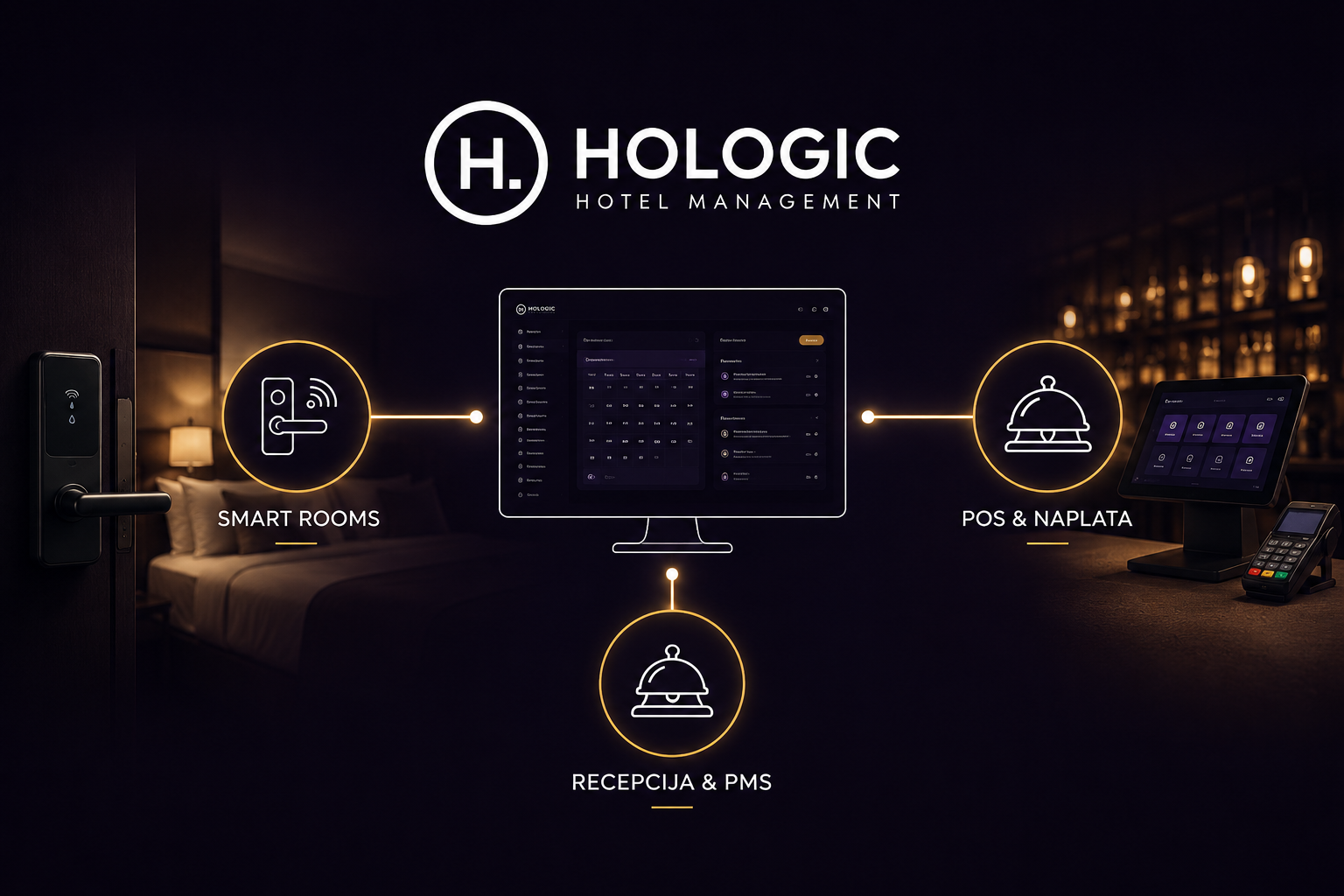
No one deliberately picks a bad hotel system. It usually happens like this: you take one vendor for the front desk and reservations because they had the best offer, another for thermostats and key cards because someone recommended them, a third for restaurant billing because you were already using it. Each of them does its own job perfectly well.
Then the season hits and you realize the problem was never in any single system. The problem lives in the space between them - at the points where they're supposed to connect, and no one built them with that in mind.
"That's their part, not ours"
Say a room keeps heating even though the guest left two hours ago, because the thermostat has no idea what the reservation says. Or a guest mentions on checkout that they never touched the minibar, and you can't check quickly because the restaurant charge never landed on their room the way it should have. Small things - until there are ten of them in a single day.
The most frustrating moment is when you call support. The company that sold you the hardware says it's a software problem. The company that sold you the software says the hardware isn't sending data the way it should. Both may be right, but that doesn't help you - the guest is waiting at the desk while you're stuck between two vendors pointing fingers.
And that's the point: this usually isn't a device or a program failing. It's a consequence of how the system was put together in the first place - from parts that have no shared owner and were never required to work together.
What it looks like when everything comes from one house
Hologic is set up differently. Smart rooms, PMS and POS weren't bolted together afterwards through some adapter - they were built inside the same team, to communicate from the start.
In everyday use that means the room "knows" about the reservation: the guest checks in and the heating simply shifts from Precomfort to Comfort, without anyone switching anything. When the guest leaves, the room goes to Eco. The restaurant charge lands on the guest's room automatically, so there's no re-typing and no checking whether something was billed. And at the front desk it's all on one screen and in one database - reservations, arrivals, housekeeping, access, spend.
None of this is some technological magic. It's simply what happens when one team owns both the hardware and the software, instead of two vendors trying to force their products to get along after the fact.
An integrated hotel system means less stress for your team
This is felt fastest by the people working with the system every day. When all the parts come from the same maker, no one has to deal with vendors passing responsibility back and forth. Support sees the whole system - from the smart room to the restaurant bill - so problems get solved faster, with fewer interruptions to the hotel's work. For the front desk and housekeeping, that means less waiting on someone else's answer and more time for guests.
The question worth asking before you sign
When you look at offers, it's natural to compare features and price. But there's one question that reveals more than both: who is responsible when it all has to connect?
If the answer is "depends which part fails," you already have a rough idea of what your season will look like. An integrated hotel management software isn't just more convenient to use - it means less time lost coordinating between vendors, faster problem-solving, and more time for what matters most to a hotel: a great guest experience.
If you'd like to see how this works in practice, in about twenty minutes we'll show you a hotel run from a single screen - rooms, front desk and billing connected from day one.
→ Book a free demo: Hologic demo
More articles

